


From 15 to 18 June 2026, I travelled to the Netherlands to attend TILTing 2026, an international conference bringing together researchers working across law, technology and society. As someone whose research involves video games, digital platforms, dark patterns and several overlapping areas of EU regulation, attending the conference was a fresh experience and a great fit for me. I really enjoyed the conference, even though the full-packed programme offered the familiar academic challenge of wanting to attend several panels taking place at the same time.
I presented my paper, ‘Online Games as Online Platforms: Can the DSA Still Be Relevant in Regulating Addictive Designs in Games?’, as part of the panel on digital addiction and platform regulation. I was delighted to join Dr Raphael Gellert, Michelle Liu and Professor André Janssen for a discussion of how contemporary digital services are designed to encourage, extend and monetise user engagement.
My presentation examined whether the EU Digital Services Act (DSA) can effectively regulate addictive and manipulative design in live-service games. The key message I conveyed to the audience is that, while the DSA provides potentially relevant tools, notably Article 25 on manipulative design and Articles 34 and 35 on systemic risks, its application depends on whether live-service games fall within the Act’s categories of ‘hosting services’ or ‘online platforms’. This remains uncertain because the DSA was primarily designed around services that host and disseminate user-generated content, whereas interaction in games often takes more dynamic and immersive forms. I argued that the increasingly social and platform-like nature of live-service games warrants a broader interpretation of the DSA and shared the possible interpretive approaches to achieve that.
I am very grateful for the invitation to present this work, as well as for the thoughtful questions and feedback from the panel and audience. The debate on whether addictive designs in social media and games may necessitate a more stringent restriction like Tabacco and alcohol is particularly very engaging.
TILTing also offered the opportunity to see several other CREATe researchers presenting their work across the conference.
Dr David Reader presented research on the changing political expectations placed on the UK Competition and Markets Authority. His paper with Dr Magali Eben examined how the government’s economic growth agenda may be reshaping ideas of regulatory accountability, particularly following the removal of the CMA Chair in 2025. The research raises an important question about whether regulators are increasingly expected to demonstrate accountability primarily to large businesses and investors, rather than to consumers, smaller firms and the wider public.
Professor Lilian Edwards, together with Dr Lachlan Urquhart, reflected on nearly 30 years of scholarship concerning law, policy and the internet, as well as 20 years of the Gikii conference series. Their presentation considered how internet law has developed alongside technological change and what its future may look like in an era of generative AI, deepfakes and increasingly unstable online information environments. In keeping with the traditions of Gikii, these serious regulatory questions were accompanied by pop-culture references and vintage internet humour.
Joanne Wong, an upcoming PhD student at CREATe, presented her research on whether Article 102 TFEU can address addictive design as a competition-law problem. Her paper argued that engagement-maximising features such as autoplay, infinite scroll, gamification and algorithmic personalisation may do more than harm individual users. They can also shape competition, reinforce market power, increase switching costs and encourage firms to compete primarily for user attention rather than on quality or innovation.

TILTing 2026 Conference. From left to right: Joanne Wong, Prof Lilian Edwards, Weiwei Yi, and Dr David Reader.
Her contribution was particularly relevant to my own presentation. During the intervals between panels, we debated the capacity of platform regulation to address addictive design in games, and to what extent competition law might respond to the gamification dark patterns on platforms. It was such a thought-provoking exchange of ideas with peers, as it is not always easy to meet academics who research a niche topic, especially considering the mechanisms of games and dark patterns.
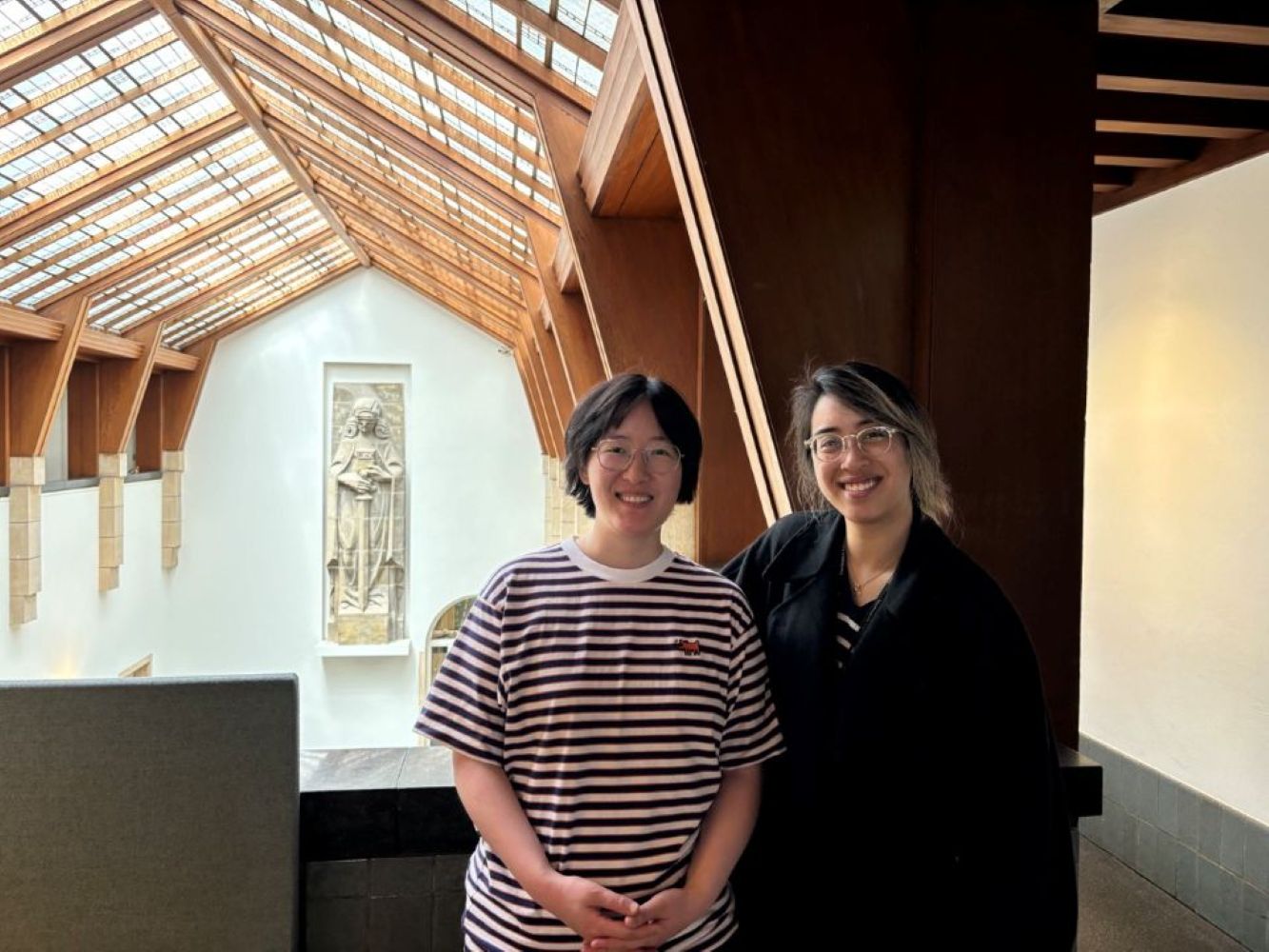
Visiting the Law and Tech Lab at Maastricth University: Weiwei Yi and Dr Johanna T. Gunawan.
This journey to the Netherlands is fruitful as I also took the opportunity to visit the Law and Tech Lab at Maastricht University (before TilTing 2026), where I was kindly invited by Dr Johanna T. Gunawan to present another strand of my doctoral research.
My Maastricht presentation focused on two chapters of my PhD thesis on monetary dark patterns in digital games and the extent to which consumer protection law, specifically the Unfair Commercial Practice Directive, can address them. I discussed how contemporary game monetisation may combine in-game currencies, personalised offers, time-limited promotions, reward systems and behavioural data analytics. I also introduced my use of empirical sources for examining systems and processes that may not be fully visible from the player-facing interface.
The feedback I received was extremely helpful. Researchers from the Law and Tech Lab raised many comments and questions that are quite on-point. For instance, the follow-up questions on whether transparency and disclosure of misleading mechanisms of game design will actually solve the problem dug out further arguments, which I did not reveal in my presentation, about the necessary to consider the shift from misleading practices to aggressive practices when the manipulation is layered and complicated. Overall, the discussion also reinforced the value of presenting work to an interdisciplinary audience, as colleagues approached the research from perspectives including privacy, consumer protection, and human-computer interaction.
Overall, the trip presented a valuable opportunity to advance my doctoral research, receive feedback from international peers, and explore various approaches to digital regulation. I would like to express my gratitude to Dr Raphael Gellert for inviting me to TilTing 2026, as well as to Dr Johanna T. Gunawan and the team at the Maastricht Law and Tech Lab for giving me the chance to present my research to dark pattern experts. I would also like to thank CREATe for supporting the visit.