


Hong Kong is making significant strides in establishing itself as a leading hub for digital assets, particularly through the regulation and issuance of stablecoins. The first stablecoin issuer licenses in the city are expected to be granted to HSBC and Standard Chartered. In this new economic segment of the market, the Hong Kong Competition Commission is gearing up to increase its capacity to monitor the market for anticompetitive practices. Professor Konstantinos Stylianou worked together with HKCC to develop and deliver a training programme to HKCC staff on the intersection of competition law in stablecoin and crypto markets.
Cognizant of risks, the Hong Kong Monetary Authority plans to issue only a limited number of licenses initially. This cautious approach is designed to ensure that the first wave of licensed issuers can demonstrate genuine real-world applications and maintain compliant, sustainable business models. The move is part of Hong Kong’s broader strategy to differentiate itself from less regulated jurisdictions by prioritizing bank-backed stablecoins, which are seen as safer and more reliable for payments and tokenized assets.
The stablecoin market itself is projected to experience substantial growth. Citigroup estimates that the issuance volumes could reach between $1.9 trillion and $4 trillion in the coming years, reflecting the increasing importance of stablecoins in the global financial system. By focusing on regulated, bank-backed stablecoins, Hong Kong aims to attract institutional players and foster innovation in digital finance, while also mitigating risks to the financial system.
In this growing market, anticompetitive practices have already emerged. Ongoing litigation involving the largest stablecoin, Tether, is testing competition laws ability to capture and analyze potentially anti-competitive conduct in new markets using traditional tools. In another case, Coinbase, the largest crypto exchange in the US, was sued for excluding a competing stablecoin from its platform, a case valued at over $1 billion.
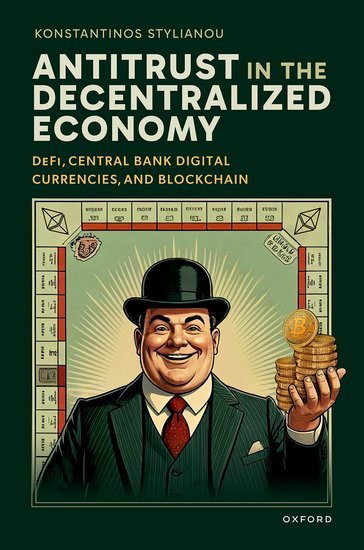
In April 2025, Professor Stylianou published a monograph on Antitrust in the Decentralized Economy, which examines the application of competition law in virtual asset and blockchain markets. The book covers both how to analyse market and competition dynamics in stablecoin and blockchain markets, and how to identify and examine potentially anticompetitive conduct, including abuse of dominant position and anticompetitive agreements. The training, which is split in two phases, one in March and one in Summer 2026, is based on the monograph and focuses on the more practical aspects of enforcing competition law in these markets.
CREATe often organises capacity building programmes for public sector officials, and has a dedicated theme on Automation, Decentralisation, and Platforms to promote research in this area. Through training programmes like this CREATe staff research is translated into actionable skills and insights.