

Blog post by Linyi Xu, PhD Candidate at CREATe, University of Glasgow

The opening ceremony of the summer school
From 20 to 31 July 2026, I travelled to Lisbon to attend the first DigiForce Summer School, held at NOVA School of Law from 21 to 30 July with support from CREATe. DigiForce is a three-year Jean Monnet Module hosted by the NOVA Platform for European Administrative and Regulatory Law (NOVA PEARL). Its research focuses on the administrative and constitutional challenges involved in enforcing EU digital regulation. Alongside its research activities, the project offers this tuition-free summer school taught by an international team and devoted specifically to the enforcement of European digital regulation.
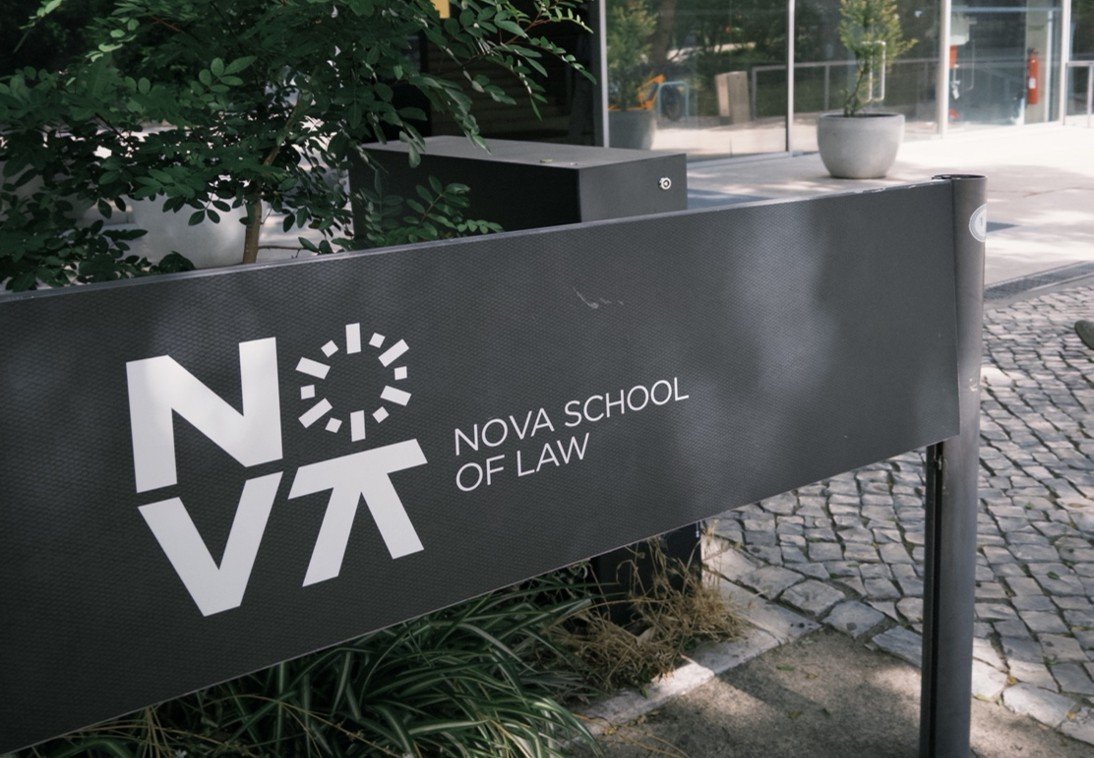
Nova School of Law
The summer school brought together law students, doctoral researchers, early-career legal professionals, academics and practitioners from different countries. Their work covered European administrative law, digital regulation, law and technology, artificial intelligence and related fields. This diversity made the summer school valuable not only as an academic programme, but also as a setting in which early-career researchers could develop their analytical skills, exchange ideas and build professional connections.
Seeing the enforcement behind the rules
The summer school moved deliberately from the legislative foundations of the Digital Services Act (DSA) and the Artificial Intelligence Act (AI Act) to the institutional arrangements through which those instruments must operate. It askes the questions: what will the administrative governance of digital regulation look like under the DSA and the AI Act? How will administrative enforcement contribute to protecting fundamental rights? How to promote rule of law values in administrative enforcement, given the complexity of the multilevel enforcement networks that are being created? These questions directed our attention beyond the wording of the legislation. Discussions of digital regulation often proceed as though the main challenge were to draft sufficiently sophisticated rules. The summer school presented a more complicated picture. Well-designed legislation matters, but its practical and constitutional significance ultimately depends on the institutions, procedures, expertise and resources through which it is interpreted and enforced.
The curriculum progressed from foundational concepts to more complex questions of implementation and enforcement. It began with introductions to EU administrative law, digital governance, and the basic structures of the DSA and the AI Act. Later sessions examined the allocation of powers between EU institutions and Member States, the AI Act’s enforcement architecture and sanctions, and the relationship between fundamental rights and harmonised technical standards. The summer school then moved to more advanced debates concerning the constitutional challenges of digital enforcement and the regulation of generative AI content moderation. Case studies connected these institutional questions to specific regulatory problems and demonstrated how apparently clear legal provisions can become far less straightforward when applied in practice.
Early-career capacity building beyond knowledge transfer
The summer school demonstrated that supporting early-career researchers involves more than transferring specialist knowledge from established scholars to junior colleagues. It also requires space to ask questions, test arguments, communicate across disciplines and recognise the limits of one’s own expertise.
One recurring message was that lawyers need epistemic humility. Legal training can encourage us to believe that careful interpretation of legislation is enough to understand how regulation works. In digital governance, that assumption is particularly risky. Lawyers do not need to become computer scientists, but they must recognise when their legal conclusions depend on technical facts, institutional capacities or organisational practices that cannot be inferred from legislation alone. At the same time, technical expertise cannot resolve questions of legality, fundamental rights, responsibility or procedural fairness. Effective digital regulation therefore requires continuing dialogue between law, technology, public administration and practice.
The international composition of the summer school made this dialogue tangible. Participants exchanged research ideas, questioned one another’s assumptions and approached shared problems from different legal traditions. Conversations between academics and practitioners were especially useful because they revealed the distance that can exist between the conceptual coherence of a regulatory model and the realities of implementing it.
The DigiForce Summer School was intellectually demanding and personally memorable. It encouraged me to look beyond the boundaries of what I had previously studied, strengthened my understanding of several foundational issues, and raised a number of meaningful questions that I hope to explore further in my research. My PhD research, Transparency Duties for Governing the Legal Risks of Generative AI Hallucinations, includes substantial doctrinal analysis of the EU AI Act. Through the summer school’s academic discussions, I gained a new perspective on the challenges involved in implementing and enforcing the Act. This helped me see how its legal requirements connect to the institutional arrangements and practical conditions that shape enforcement. More importantly, it showed me how an international programme can support early-career researchers by combining substantive learning, methodological reflection, interdisciplinary exchange and a genuine sense of professional community. I am deeply grateful to NOVA PEARL and the teaching team for creating such an engaging programme, and to CREATe for supporting my participation.